
Essay: On Immigration, Resilience and Finch & Midland
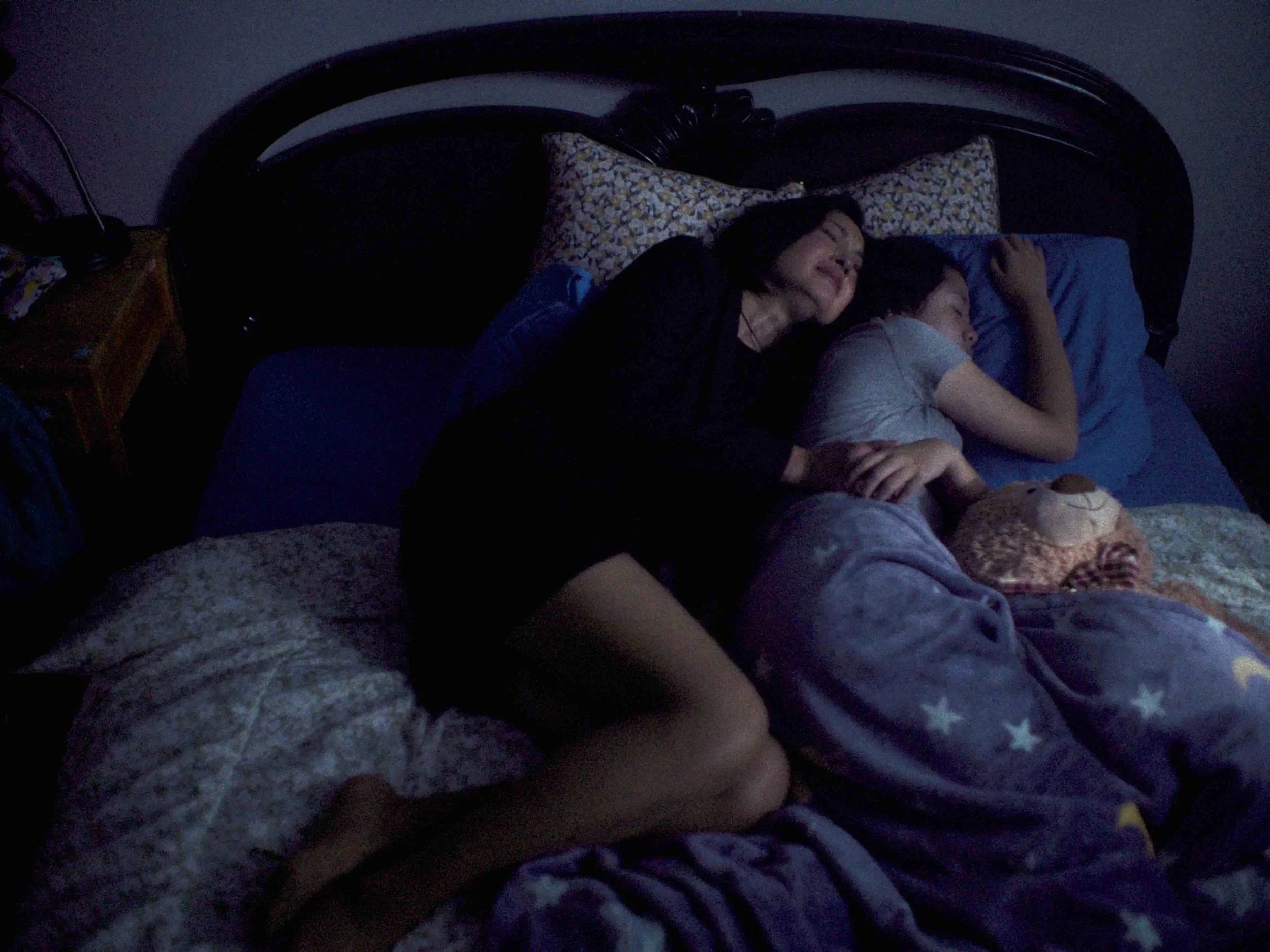
I remember the falls and summers spent at Finch & Midland.
It was a time before Netflix and Uber existed. We walked everywhere. The sidewalks felt longer then. The air smelled like exhaust, soy sauce and late afternoons. My mother would take us to a nearby park or a school’s open field and conduct “science experiments.” They were nothing more than baking soda and vinegar. But to me, they were cool mad science.
She was working as a chemist at the time, a job she dreaded, though I didn’t know that yet. I thought my mom was the coolest person in the world. I believed she was changing the world with beakers and formulas. Only later would I understand the quiet sacrifices behind that lab coat.
Working on Finch & Midland has felt like returning to that intersection. Both geographically and emotionally at the same time.
Producer Kim Yu took me on a tour of the businesses that allowed the crew to film there. We sat inside Very Fine restaurant in Scarborough, right at Finch & Midland, and I felt flashbacks rush toward me. Family parties. Loud laughter. Plastic tablecloths. A moment when we were told we weren’t actually invited to a celebration, and my little sister had already dug into her strawberry ice cream.
“What would you like to order?” Kim asked.
I paused, irrationally afraid, as if I had never seen a menu before. I was reminded of my difference. Growing up Filipino. My insecurity about not being able to use chopsticks properly. My parents never knew how to use them. The subtle ways you feel like an outsider, even among other immigrant families.
Before I could say anything, Kim looked down and said gently, “I’m horrible with chopsticks. I’m getting us cutlery.”
It was such a small gesture. But it dismantled something in me.
Kim had hired me only a week before. She had told me about her journey from publicist to producer, how unpredictable and relentless it had been. We talked about how so many people change in the entertainment industry, even people “like us” who started the same way we did. She sipped her green tea from a small porcelain cup and said, almost like a quiet directive: “Always remember where you come from.”
I nodded.
I could hear my mother saying the same thing.
Immigrant stories are built on patience.
“Be patient,” my grandmother, Nanay, would tell my mother when she struggled adjusting to life in Canada. “Your time will come.”
I remember the strain in my mother’s voice during those early years. The way everything felt temporary. The way home was both here and somewhere else.
Today, on phone calls during her drive home from work, she tells me the same thing: “Be patient.”
Resilience in immigrant families is rarely loud. It is stoic. It is strategic. It is forward-looking. It is waking up at 5 a.m. to drive your son back to university after a weekend at home. It is picking up his laundry so he doesn’t have to go to a laundromat. It is working jobs you don’t love so your children can one day love theirs.
Finch & Midland captures that patience in a way that feels almost surgical. The characters move through disappointment after disappointment but with endurance. With hope that exists even when it feels unjustified.
The film arrives at a complicated time in the immigration conversation. Across North America, rhetoric about belonging feels sharper than ever. Questions about who gets to feel “at home” dominate headlines. Canada has always been home to me and yet growing up, I was often treated like I didn’t fully belong.
That tension, of being rooted yet peripheral, lives inside this film.
When I think about my career now, running my own firm, working with filmmakers around the world, sitting in rooms I once believed were inaccessible, I know it is all a continuation of my parents’ migration.
In my early twenties, I used to complain about not having enough connections. I thought opportunity was something inherited.
But migration itself is the ultimate act of building connection from nothing.
My parents uprooted their lives so I could have this one. Every press tour, every premiere, every project I represent carries their sacrifice quietly behind it. The circles I now occupy exist because they were willing to start over.
After our first day touring locations, Kim led me to Yueh Tung Restaurant, another landmark in my family’s story. It was where my parents would eat when they visited me in my early twenties. I remember my dad driving into the city, picking up my laundry, driving back home. I remember the Monday mornings when he would leave at 5 a.m. to take me back to my dorm.
My entire life, I’ve held this impossible goal of “giving my parents the world.”
The truth is, I never will. Because what they gave me is immeasurable.
Finch & Midland understands that impossibility. The characters are chasing something better, even as life keeps knocking them down. The film ends on a note that is almost unsettling in its ambiguity. But director Timothy Yeung reminded me that we are meant to wonder what happens next.
Hope doesn’t resolve neatly. It continues.
The film is edited so that the stories feel separate yet quietly intertwined. That structure mirrors the immigrant experience itself: individual journeys, sharing sidewalks, never fully colliding yet deeply connected.
For me, it was Theresa Lee’s character that lingered. A mother studying in her spare time, working multiple jobs, trying to build a career while still being everything her child needs. There is no melodrama in her struggle. Just persistence.
Just patience.
When people describe Finch & Midland as a “small film,” I think about that word differently. It opens in theatres on February 13 — up against a massive studio weekend. By traditional metrics, it may seem modest.
But immigrant stories are rarely small.
They are tectonic shifts disguised as quiet lives.
I’m lucky to be a publicist for projects like this. In a fast-paced industry built on spectacle and urgency, films like Finch & Midland ask us to slow down. To observe. To remember.
Sometimes, in the chaos of adulthood, I imagine going back to that park at Finch & Midland. My brother and cousin beside me. My mother pouring vinegar into baking soda. Watching the reaction erupt — unpredictable, messy, alive.
Maybe that’s what immigration is, too.
An experiment in faith.
And maybe patience, as Nanay always suggested, is the quiet chemical reaction happening beneath it all.
Finch & Midland opens in theatres February 13. Watch it. Think about the people in your life who are simply trying to build something better. And hold your heart there a little longer.